A collection of miscellaneous ‘factoids’ from past WOM conferences*
[* Compiled from archival files and collected notes. Additional information on the early conference history (1977–1997) can be found in the article by past chairmen: P.J. Blau, K.C. Ludema, S.K. Rhee, W.A. Glaeser, A.W. Ruff, S. Bahadur, R.G. Bayer, D.A. Rigney, O. Vingsbo, J. Larsen-Basse, The birth and history of the International Conferences on Wear of Materials, Wear 203–204 (1997) 1–10. https://doi.org/10.1016/S0043-1648(96)07407-8]
WOM 1991 held in Orlando
Sunny Florida welcomed the attendees to WOM 1991. Dave Rigney was conference general chair, with Olof Vingsbo as Vice-Chair and Paul Swanson as Secretary. Clark Cooper, United Technologies Research Center, chaired the photomicrograph competition. A survey was taken of attendees regarding when they preferred WOM proceedings to be available. The results: 52 at the conference, 4 before the conference, 3 after the conference, and 2 no comment. At the steering committee meeting on April 10, 1991, Prof. Duncan Dowson (Leeds, UK) pointed out decreasing WOM attendance by mechanical engineers, and Ray Bayer and Bill Glaeser echoed a need for more applicationsoriented content. Kwan Rhee’s suggested that more day-to-day practical tribology problems should have a forum at WOM, and from that early discussion the communications and case studies categories for WOM papers originated.
WOM 1989 introduces a poster session and wear photomicrograph competition
Organizers of WOM continued to experiment with new features and conference formats. In 1989, the ASM International Wear Resistant Materials Group offered to sponsor a poster session and photomicrograph competition patterned after the International Metallographic Society’s annual competition. The poster session was organized by Prof. Jim Wert, Vanderbilt University, and the wear photomicrograph competition was organized by Prof. Francis E. Kennedy, Thayer School, Dartmouth College. Keynote speakers at WOM 1989 were Horst Czichos (BAM, Germany), Anthony de Gee (Delft, the Netherlands), Traugott Fischer (Stevens Institute, USA), and Koji Kato (Tohoku University, Japan). The conference featured an optional ski trip to Copper Mountain, Colorado. A single hotel room was $75 and a double room was $95.
WOM 1993 returns to San Francisco
The third WOM was held in San Francisco in 1981, and a dozen years later WOM returned to the ‘City by the Bay.’ Conference committee included Olov Vingsbo, General Chair; Dave Rigney, Past Chair; Jorn Larsen-Basse, Program Chair; Paul Swanson, Secretary; Ken Ludema as Full Paper Editor; and Ray Bayer and Editor for Communications and Case Studies. Unscheduled 5-minute presentations were allowed for the first time, at the end of sessions. The poster session and photo competition was held again. Categories for photo entries were Optical Microscopy, Scanning Electron Microscopy, Transmission Electron Microscopy, Novel Imaging Techniques, and the Art of Tribology. Full conference pre-registration for WOM 1993 was $420, but only $ 360 for presenters, members of endorsing societies, and session chairpersons. Students paid $60. The conference was held at the Grand Hyatt Hotel on Union Square where single and double rooms were offered at $125/night.
WOM 1995 comes to Cambridge, Massachusetts (near Boston)
After leaving ASME and later trying the Elsevier Conference Department, organizers of WOM turned in 1993 to a private conference organizing group, Conference Management Associates of Virginia USA, to help administer the meeting in 1995. At that time the General Chair was Jorn Larsen-Basse, Program Chair was Peter Blau, and Secretary was Steve Danyluk. Poster chair was Howard Hawthorne, Bill Ruff organized the commercial exhibit, and the editors were once again, Ken Ludema and Ray Bayer. A speaker’s breakfast was planned for each morning, but on the first morning, there was some confusion and some of the first WOM authors to arrive accidentally took breakfast from the buffet intended for a law enforcement conference also held at the hotel. A wear control tutorial was organized by Ray Bayer and Bill Glaeser, and held on Sunday afternoon before the conference for a fee of $100. Speakers included Ray Bayer, Bill Glaeser, Jorn Larsen-Basse, and Ken Budinski. In early WOM conferences, the wear tutorial was sometimes held in a technical session at the end of the conference, but later it was split off as a separate activity. Keynote lectures were presented by Marcell Brendle (CNRS, France) and Nick Myshkin (Academy of Sciences, Gomel, Belarus). As a surprise, Prof. Ernest Rabinowicz (MIT) and his wife Ina were invited to the WOM luncheon, but it was his wife and not the esteemed professor who gave an amusing and well-received luncheon talk on what it was like being married to a tribologist. Conference pre-registration was $375 for presenters and $475 for full registrants. Student registration was $75, and the bound conference proceedings were offered separately for $75.
WOM 1997 is held jointly with the International Coatings Conference (ICMCTF) in San Diego
As another bold experiment, it was decided by the organizers to team with the American Vacuum Society to hold WOM at the same venue as the annual International Conference on Metallurgical Coatings and Thin Films (ICMCTF). The rationale was that many of the attendees of WOM might appreciate access to the coatings talks and visa versa for the ICMCTF attendees as regards wear of materials. It would also save travel costs for those who were interested in both meetings. The experience showed that theory and practice are two different things. WOM attendance may have been reduced somewhat, conflicting with papers at ICMCTF and the accommodations given to WOM were less than those given to the larger ICMCTF group. Until 1996, finances for the entire WOM conference were in the hands of the conference officers, and that put great pressure on the chairman since, if the conference failed to cover costs, the chairman was personally responsible to the hotel and other contractors for the financial shortfall. Furthermore, it made it difficult to sign contracts with hotels, audio visual services, and other conference suppliers. Therefore, the then WOM Chairman, Peter Blau, of Oak Ridge National Laboratory (USA), set up a not-for-profit corporation called Wear of Materials, Inc. to establish the conference group as a legal entity in the United States. Consequently, Blau became WOM, Inc.’s first President and Steve Danyluk, Georga Tech, was the first Vice Present, with Howard Hawthorne of NRC, Canada, as Secretary. Elsevier was again printing the proceedings, but the bound volumes were held up in U.S. Customs and could not be distributed at the WOM registration desk as planned. Eventually, the situation was resolved when Dean Eastbury of Elsevier eventually found the books in another part of San Diego, and had them delivered to the Town and Country Resort. The 1997 conference luncheon speaker was from the San Diego Zoo. The poster session and photo contest were run by Steve Hsu of NIST (USA). Despite its relatively low attendance and complicated negotiations with the ICMCTF, leveraging WOM 1997 with ICMCTF allowed WOM to finish well in the black, getting the fledgling corporation off to a good start.
Notes on the WOM 2003 Tutorial
Tutorials started as special sessions offered at the end of the WOM conferences, but later it was decided to offer them for a fee on the Sunday before the conference in order to better prepare the attendees to hear the conference papers. Content of the tutorials varied over the years, some of which were basic principlesoriented and others emphasized applications. Changes in speakers and subjects were based on the chairman and on feedback from students. For example, the 2003 wear tutorial was held on Sunday, March 30, 2003, in the Renaissance Hotel, Washington, DC. The title of the tutorial was “Introduction to the Principles of Wear and Wear Control.” A total of 24 students attended, and fee for the tutorial was US$125. Two new subjects were introduced this time, based on suggestions from the students of the Wear of Materials 2001 tutorial in Vancouver, Canada. The instructors and subjects of the WOM 2003 tutorial presentations were: Peter Blau – Introduction to Wear Types and Wear Testing, Ray G. Bayer – Sliding, Fretting, and Impact Wear, Ian M. Hutchings – Abrasive and Erosive Wear, Peter J. Blau – Construction and use of Wear Maps (new for 2003), Steven M. Hsu – Lubrication (new for 2003), Kenneth G. Budinski – Surface Treatments and Coatings
“Satellite” Meetings
Not only have WOM conferences served as forum for the wear of materials community, but they have also attracted out-of-hours meetings of a number of other organizations whose scopes overlapped that of the conference. Other groups that met in conjunction with the conference have included ASTM Committee G2 on Wear and Erosion, editorial boards of Tribology International and Wear, the TriboCorrosion Network, and Working Area 1 on Wear Testing of the Versailles Agreement on Advanced Materials and Standards (VAMAS)


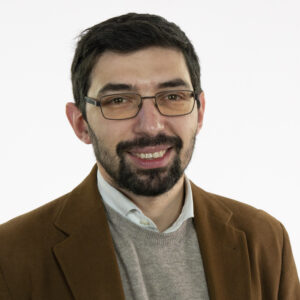

 Peter J. Blau is a Distinguished Research and Development Staff Member, and Leader of the Tribology Research User Center in the Materials Science and Technology Division of Oak Ridge National Laboratory. He received B.S. and M.S. degrees in Metallurgy and Materials Science from Lehigh University, and a Ph.D. in Metallurgical Engineering from The Ohio State University. His research career began with studies of impact-melted meteorites, and led to an appointment as a co-investigator for the NASA Apollo Lunar Sample Examination Program (ALSEP) in the early 1970s. With more than 30 years of research, development, and project management experience in materials engineering and tribology, he has held positions at the Air Force Materials Laboratory, the National Bureau of Standards (now NIST), the Office of Naval Research, and Oak Ridge National Laboratory.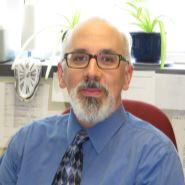
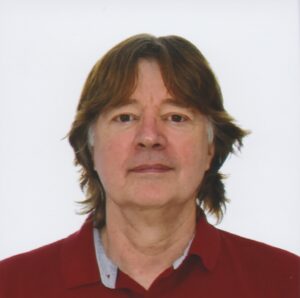
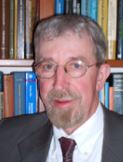
 Mark Gee is an NPL Fellow in the Materials Division at the National Physical Laboratory. Recently he was awarded the status of visiting Professor at the University of Southampton and is a core member of the national Centre for Advanced Tribology and Southampton. He leads projects that are concerned with the development of an improved infrastructure for friction and wear testing in the UK. Particular research interests are the mechanisms of abrasive and erosive wear for ceramics and other hard materials, and the development of nanotribology test techniques. He has published over 200 papers and reports. He has recently been Chairman of the UK Institute of Physics Tribology Group, and was recently Secretary of the Surface Engineering Division of the UK Institute of Materials, Mining and Minerals. He is also a member of the International Advisory Editorial Boards of Tribology International, and Tribology – Materials Surfaces and Interfaces. He is a member of various standards committees including ASTM Committee G2 on Wear, ISO TC 206 Advanced Ceramics, and ISO TC 229 Nanotechnologies where he lead a project that recently published the first international standard on nanotechnologies.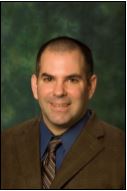
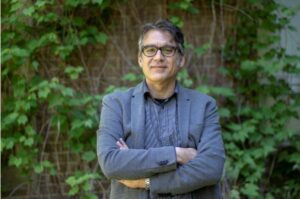
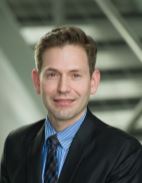
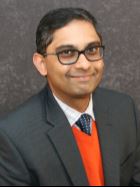
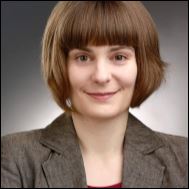

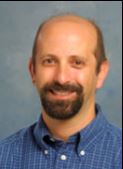
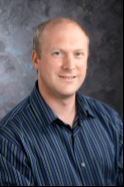 Peter M. Lee is a Staff Engineer and the Chief Tribologist at Southwest Research Institute (SwRI) in San Antonio Texas. He established the Tribology Research and Evaluations Group in 2011 following his move to the US from the University of Leeds, where he was a Royal Academy of Engineering Research Fellow.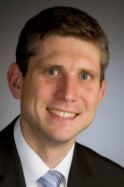
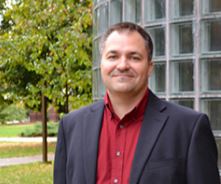
 Peter Filip, PhD, DSc