WOM Early Career Investigator Award
Eligibility
- A researcher from academia or research institute or an engineer from industry doing R&D in materials tribology
- No more than six (6) years after Ph.D. graduation or no more than ten (10) years after M.S. (if highest degree) graduation
- Application: Cover Letter, CV, and 2 support letters
- Application due: Same as the manuscript submission for the WOM conference
- Up to two (2) awards per WOM conference and announced at the Awards Dinner
- Award: Plaque signed by the Conference Chair
- Requirements for awardees: Must attend (may receive registration discount pending request and fund availability) and present a poster of research highlights
Application should be sent to qujn@ornl.gov in a single PDF
WOM Student Scholarship
Eligibility
- A Ph.D. or M.S. candidate with thesis topic in materials tribology
- Application: Cover Letter, CV, and 2 reference letters
- Application due: Same as the poster abstract submission for the WOM conference
- Up to two (2) awards per WOM conference and announced at the Awards Dinner
- Award: Certificate signed by the Conference Chair and $500 cash plus registration waiver
- Requirements for awardees: Must attend and present a poster of thesis work
Application should be sent to qujn@ornl.gov in a single PDF
Best poster awards
Eligibility
- First author must be a student or postdoc.
- To be considered for the Best Poster Awards, a digital copy of the poster must be submitted at one week before the conference.
- Past winners are eligible.
- Posters from BoD and Steering Committee members are eligible, but the BoD/SC member should avoid getting onto the stage to receive the award.
Evaluation Criteria
- Posters will be evaluated based on originality, technical quality, scientific impact, clarity of presentation, and research integrity.
Ken Ludema Best Paper Awards
As a long-standing tradition of the Wear of Materials (WoM) Conference, Best Paper Awards are presented to recognize and promote high-quality scientific contributions to the wear and tribology community. Awards will be given for 1st Place, 2nd Place, and 3rd Place papers.
Eligibility
- All papers presented at the conference (either as oral or poster presentation) are eligible for consideration.
- Papers with significant ethical concerns, inadequate validation, or insufficient novelty will be considered ineligible.
Evaluation Criteria
- Papers will be evaluated based on standards consistent with the aims, scope, and scientific rigor expected for publication in the journal WEAR, including originality, technical quality, scientific impact, clarity of presentation, and research integrity.
Ken Ludema Best Paper Award winners from recent conferences
(2025) J. Qi, M. Bai, J. Nutter, B. Inkson, W.M. Rainforth, Correlation of micromechanical property and microstructure of tribo-layers, Wear, 571, 205785. https://doi.org/10.1016/j.wear.2025.205785
(2023) K. E. Van Meter, A. A. Pitenis, K. L. Harris, W. G. Sawyer, B. A. Krick. Contact Pressure Dependent Mechanisms of Ultralow Wear PTFE Composites. Wear, 522, 204715. https://doi.org/10.1016/j.wear.2023.204715
(2021) S. Hanke, S. A. Kaiser. Comparison of damage mechanism: Acoustic cavitation versus series of single laser-induced bubbles. Wear, 476–477, 203641. https://doi.org/10.1016/j.wear.2021.203641
(2019) D. Ma, T. J. Harvey, R. G. Wellman, R. J. Wood. Characterisation of rain erosion at ex-service turbofan blade leading edges. Wear, 426–427 (Part A), 539–551. https://doi.org/10.1016/j.wear.2018.12.050
(2017) R. M’Saoubi, O. Alm, J. M. Andersson, H. Engström, T. Larsson, M. P. Johansson-Jõesaar, M. Schwind. Microstructure and wear mechanisms of texture-controlled CVD α-Al₂O₃ coatings. Wear, 376–377, 1766–1778. https://doi.org/10.1016/j.wear.2017.01.071
(2015) M. Darden, C. Schwartz. Skin tribology phenomena associated with reading braille print: the influence of cell patterns and skin behavior on coefficient of friction. Wear, 332–333, 734–741. https://doi.org/10.1016/j.wear.2014.12.053
(2013) H. Nyberg, S. Alfredson, S. Hogmark, S. Jacobson. The asymmetrical friction mechanism that puts the curl in the curling stone. Wear, 301(1–2), 583–589. https://doi.org/10.1016/j.wear.2013.01.051
(2011) M. T. Mathew, M. J. Runa, M. Laurent, J. J. Jacobs, L. A. Rocha, M. A. Wimmer. Tribocorrosion behavior of CoCrMo alloy for hip prosthesis as a function of loads: A comparison between two testing systems. Wear, 271(5–6), 1210–1219. https://doi.org/10.1016/j.wear.2011.01.086
(2009) A. L. Mohd Tobi, J. Ding, G. Bandak, S. B. Leen, P. H. Shipway. A study on the interaction between fretting wear and cyclic plasticity for Ti-6Al-4V. Wear, 267(1–4), 270–282. https://doi.org/10.1016/j.wear.2008.12.039
(2007) J. D. Gates, G. J. Gore, M. P. Hermand, M. P. Guerineau, P. B. Martin, J. Saad. The meaning of high stress abrasion and its application in white cast irons. Wear, 263(1–6), 6–35. https://doi.org/10.1016/j.wear.2006.12.033






 Peter J. Blau is a Distinguished Research and Development Staff Member, and Leader of the Tribology Research User Center in the Materials Science and Technology Division of Oak Ridge National Laboratory. He received B.S. and M.S. degrees in Metallurgy and Materials Science from Lehigh University, and a Ph.D. in Metallurgical Engineering from The Ohio State University. His research career began with studies of impact-melted meteorites, and led to an appointment as a co-investigator for the NASA Apollo Lunar Sample Examination Program (ALSEP) in the early 1970s. With more than 30 years of research, development, and project management experience in materials engineering and tribology, he has held positions at the Air Force Materials Laboratory, the National Bureau of Standards (now NIST), the Office of Naval Research, and Oak Ridge National Laboratory.

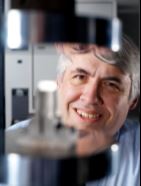 Mark Gee is an NPL Fellow in the Materials Division at the National Physical Laboratory. Recently he was awarded the status of visiting Professor at the University of Southampton and is a core member of the national Centre for Advanced Tribology and Southampton. He leads projects that are concerned with the development of an improved infrastructure for friction and wear testing in the UK. Particular research interests are the mechanisms of abrasive and erosive wear for ceramics and other hard materials, and the development of nanotribology test techniques. He has published over 200 papers and reports. He has recently been Chairman of the UK Institute of Physics Tribology Group, and was recently Secretary of the Surface Engineering Division of the UK Institute of Materials, Mining and Minerals. He is also a member of the International Advisory Editorial Boards of Tribology International, and Tribology – Materials Surfaces and Interfaces. He is a member of various standards committees including ASTM Committee G2 on Wear, ISO TC 206 Advanced Ceramics, and ISO TC 229 Nanotechnologies where he lead a project that recently published the first international standard on nanotechnologies.






 Peter M. Lee is a Staff Engineer and the Chief Tribologist at Southwest Research Institute (SwRI) in San Antonio Texas. He established the Tribology Research and Evaluations Group in 2011 following his move to the US from the University of Leeds, where he was a Royal Academy of Engineering Research Fellow.

 Peter Filip, PhD, DSc